


5 Signs Your Furnace Needs Repair or Replacement
Last Updated: October 25, 2026
Quick Summary
Whether to pursue furnace repair or replace depends on your system's age, the failure type, and repair cost relative to replacement. Use the 50% rule as a starting point: if repair cost exceeds 50% of a new furnace's installed price, replacement is usually the smarter choice, especially for systems over 15 years old or with repeated breakdowns.
Furnaces typically last 15 to 20 years with proper maintenance; systems under 10 years old are almost always worth repairing.
A cracked heat exchanger is a safety issue that warrants replacement regardless of cost, as it compromises the combustion system.
Frequent breakdowns, three or more in two years, signal a failing system and make replacement more economical than repeated repairs.
Run a lifetime cost comparison that includes repair estimates, expected remaining life, future repair costs, and energy efficiency differences.
Get a detailed written estimate breaking down parts and labor separately before approving any repair work.
Table of Contents
When Your Furnace Breaks Down: Immediate Steps to Take
Understanding Furnace Repair Cost and When It Makes Sense
Typical repair price ranges by failure type
Why the breakdown type changes the decision
A transparent lifetime cost comparison
Furnace Replacement Cost: What You Should Expect
How Long Do Furnaces Last and When Age Matters
Signs You Need a New Furnace Instead of a Repair
The 50% Rule: Your Decision Framework for Repair vs. Replace
Where the rule breaks down after an actual breakdown
A breakdown-specific decision matrix
Questions to ask before you approve the work
Schedule Your Furnace Evaluation Today
Frequently Asked Questions
When Your Furnace Breaks Down: Immediate Steps to Take
Safety comes first. Carbon monoxide is colorless and odorless, so never ignore headaches, dizziness, or nausea when your furnace fails (the CDC).

Once you've confirmed safety, call for professional help.
While you wait, close off unused rooms, use space heaters away from flammable materials, and stay elsewhere if temperatures drop dangerously.
Don't attempt DIY furnace repairs. Gas lines, electrical components, and combustion chambers make mistakes dangerous and expensive.
Understanding Furnace Repair Cost and When It Makes Sense
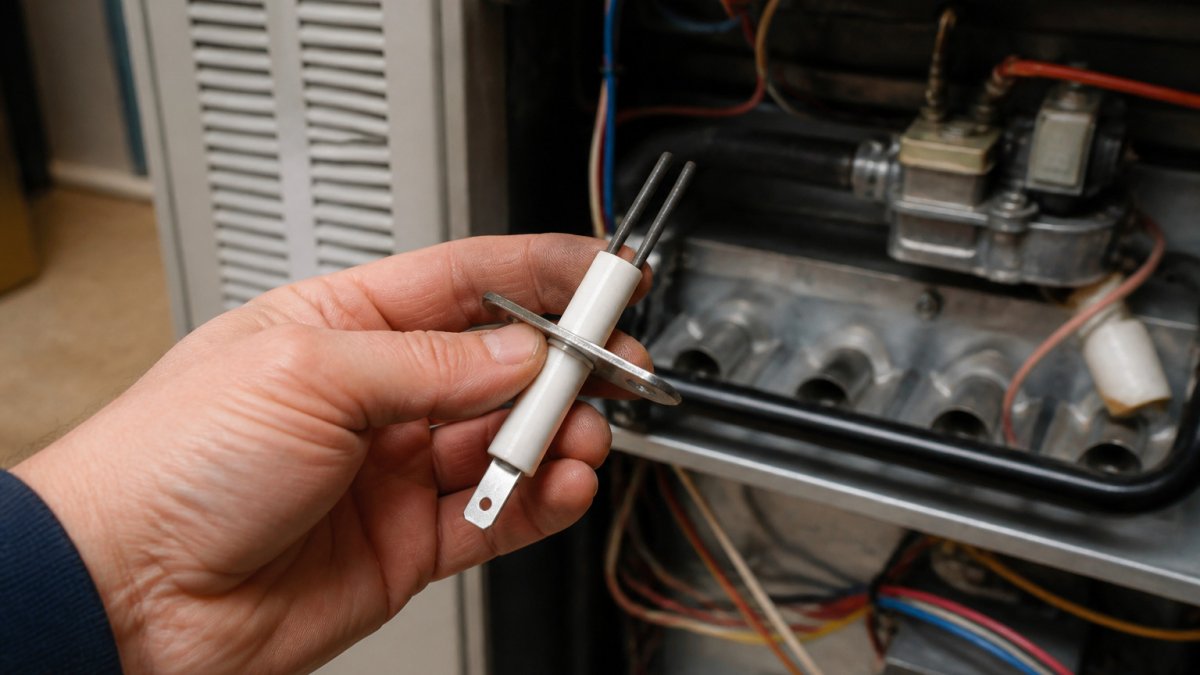
Furnace repair cost varies dramatically depending on what's broken. A simple ignitor replacement costs far less than a cracked heat exchanger. Get a professional diagnosis first, then read it through the lens of what actually failed.
Typical repair price ranges by failure type
Residential furnace repairs cluster into a few common failure categories, each with a rough price band for parts and labor. Treat these as planning ranges, not quotes, brand, access difficulty, and local labor rates move the number:
Ignitor or flame sensor: Often the least expensive fix, commonly in the low hundreds of dollars. These are wear items and frequently covered under a service plan.
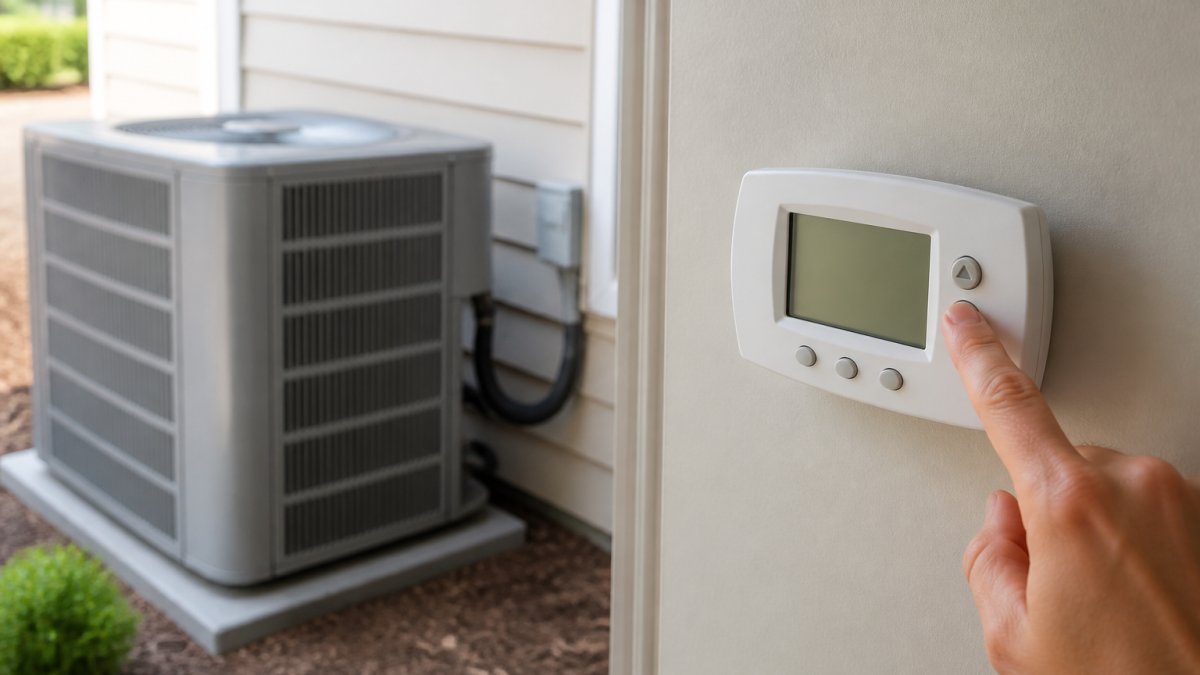
Thermostat or control board: A mid-range repair, typically several hundred dollars, and pricey on high-efficiency models because the part itself is expensive.
Inducer motor or draft fan: A mid-range to upper-range repair, often several hundred dollars, because the part and the labor to access it both add up.
Ask for a detailed estimate that breaks down parts and labor separately. A diagnostic fee typically applies upfront, and many companies credit it toward repair costs if you move forward.
Why the breakdown type changes the decision
The same bill means different things depending on what failed. A failed ignitor on a 12-year-old furnace is a wear item, and repair almost always wins. A failed blower motor is a bigger bill but still a single component.
So the real question isn't just "Can this be fixed?" but "Should it be fixed?" That depends on age, repair history, failure type, and breakdown frequency.
A transparent lifetime cost comparison
Rather than relying on a single rule of thumb, run the numbers side by side:
Repair path: Add the repair estimate, the expected remaining life of the system (say 3-5 years on a 15-year-old furnace), an allowance for likely future repairs during that window, and the operating cost of the existing furnace at its current efficiency for those same years.
Replace path: Add the installed replacement price and the operating cost of the new furnace at its higher efficiency for the same number of years, then subtract any utility rebates or tax credits you qualify for. The new system also carries a fresh manufacturer warranty, which removes most repair risk for the early years.
Compare the totals, not the sticker prices. A repair that looks cheap today can lose once you add two more service calls and higher monthly gas bills over five years. A replacement that looks expensive can win once efficiency savings and warranty coverage are counted.
This is where financing matters: spreading a replacement over a term can make monthly cash flow comparable to the repair-plus-rising-utility-bill path. Ask for both the cash price and the financed monthly payment so you can compare like with like.
Pro Tip Ask the technician to write the diagnosis and the recommended repair on the invoice, including the part number and whether the part is in stock. Parts availability is a real decision factor: a discontinued heat exchanger on a 16-year-old furnace can turn a "repair" into a weeks-long wait, which in winter is its own argument for replacement.
Furnace Replacement Cost: What You Should Expect
Furnace replacement cost depends on the new system's efficiency rating, installation complexity, ductwork modifications, and local labor rates. Rather than guessing, book a heating repair service consultation with Shoretech Services for an accurate quote.
What matters more than sticker price is total cost of ownership: a high-efficiency furnace costs more upfront but saves on heating bills, while a cheaper, less efficient system costs more monthly.
With approved credit, you can spread replacement costs over time instead of paying everything upfront, making a high-efficiency upgrade more affordable.
When comparing replacement options, consider warranty coverage. A new furnace typically comes with manufacturer coverage, and many installers add extended parts warranties.
How Long Do Furnaces Last and When Age Matters
A furnace typically lasts 15 to 20 years with proper maintenance; neglected systems fail earlier. Age is one of the strongest signals for whether repair or replacement makes sense.
If your furnace is under 10 years old, repair almost always wins financially. Parts are still available, the system has remaining useful life, and repair costs won't yet approach replacement expense. An ignitor failure on a 7-year-old furnace deserves a repair.
Between 10 and 15 years, you're in the gray zone. A single repair might still be worth it, but watch for patterns. If you're repairing the same system twice in one heating season, replacement is worth serious consideration.
Beyond 15 years, parts get harder to source, repair costs climb, and declining efficiency pushes heating bills higher. Even a modest repair is often just delaying the inevitable replacement.
Age alone isn't the deciding factor, frequency of repairs and system performance matter equally. But if your furnace is 15 years or older and just failed, the conversation shifts from "Can we fix this?" to "Is replacement the smarter choice?" Learn about furnace tune-ups that extend system life through preventive maintenance, which can add years to an aging furnace's remaining useful life.
Signs You Need a New Furnace Instead of a Repair
Several warning signs suggest your furnace is approaching the end and replacement is the better path than repair.
Frequent breakdowns are the clearest signal.
Banging, rattling, or grinding sounds indicate worn components; a furnace should run quietly, and loud operation means internal parts are deteriorating.
Rising heating bills despite normal usage mean an aging furnace is losing efficiency, you're paying more for less comfort.
If your furnace shows any combination of these signs, schedule a furnace evaluation with a professional.
The 50% Rule: Your Decision Framework for Repair vs. Replace
The 50% rule is a practical guideline for furnace repair or replace decisions. Here's how it works: multiply your furnace's age by the cost of a new system.
Example: Your furnace is 12 years old.
The rule accounts for older systems failing again soon: fix one problem and another major repair may follow months later. Replacement ends the cycle and brings a fresh warranty.
Where the rule breaks down after an actual breakdown
The 50% rule was built for a general repair-versus-replace decision, not for the moment your furnace just quit in January. After a breakdown, three things the rule ignores become decisive:
Urgency and temporary heat. If the repair requires a part that's days out, you're paying for space heaters, hotel nights, or a cold house in the meantime. That cost belongs in the repair column, and it can push a borderline repair over the line.
The failure type. A heat exchanger crack is a safety issue, not just a cost issue. No percentage threshold should keep a compromised combustion system in service. Conversely, a failed ignitor on a 9-year-old furnace is a wear item and the rule's math rarely justifies replacing a system with years left.
Repeat-failure pattern. The rule uses a single repair estimate. If this is the second or third breakdown this season, the honest repair number is the current bill plus the expected cost of the next failure, which is usually higher than the rule assumes.
A breakdown-specific decision matrix
Use the 50% rule as the first filter, then run the failure through this matrix before you approve work:
Situation | Likely call |
Furnace under 10 years, single wear-item failure (ignitor, flame sensor, thermostat) | Repair |
Furnace under 10 years, major component failure (blower, control board, inducer) | Repair, but get a written estimate and confirm parts availability |
Furnace 10-15 years, first failure, repair under the 50% threshold | Repair |
Furnace 10-15 years, second failure in the same season, or repair near the threshold | Weigh replacement seriously; run the lifetime cost comparison |
Furnace 15+ years, any major repair | Replacement usually wins |
Any age, cracked heat exchanger or combustion safety concern | Replace; do not keep the system in service |
Watch Out If you smell gas, hear a boom, or your carbon monoxide alarm sounds, stop troubleshooting and leave the home. Call emergency services and your gas utility from outside. No cost rule applies to a combustion safety emergency. Questions to ask before you approve the work Whichever path the rule points to, get answers to these before you sign: What exactly failed, and is the part in stock or on order? Is the estimate for the repair all-in, including diagnostic fee, parts, labor, and any permit? What is the warranty on the repair part and labor, and how does it compare with the manufacturer warranty on a new system? If we repair, what is the expected remaining life of the system, and what other components are near end of life? If we replace, what is the installed price, the financed monthly payment, and the expected annual energy savings at current rates? Can I get the diagnosis and estimate in writing so I can compare a second opinion? A second opinion is reasonable on any estimate that crosses the 50% threshold, and it's essential on a heat exchanger diagnosis, because that finding drives the most expensive decision in the whole process. Use the 50% rule as a starting point, not a final answer. Talk with Shoretech Services about your furnace's age, repair history, efficiency rating, and how long you plan to stay, together these tell a clearer story than any single rule.
Schedule Your Furnace Evaluation Today
The decision between furnace repair or replace doesn't have to be stressful. A professional evaluation gives you the facts you need to choose confidently.
Shoretech Services responds 24/7 to furnace emergencies and provides detailed repair estimates and replacement consultations.
Contact us for quick service to schedule your furnace evaluation.
Your home's comfort matters. Let's get your furnace working right.
When heating fails mid-winter, the pressure to decide fast is real.
Frequently Asked Questions
Should I repair or replace my furnace after it breaks down?
The decision depends on three factors: your furnace's age, the repair cost, and repair frequency. If your furnace is under 10 years old and the repair cost is less than 50% of replacement cost, repair usually makes sense. If your system is 15+ years old, has frequent breakdowns, or the repair exceeds the 50% threshold, replacement is often the better choice. Get a professional inspection to determine which option saves you money long-term.
What is the 50% rule for furnace repair or replacement?
The 50% rule is a cost threshold used to decide between repair and replacement. If the repair cost exceeds 50% of the estimated replacement cost, replacement becomes more economical. This rule accounts for remaining system lifespan and helps prevent spending money on a unit that will fail again soon.
How long do furnaces typically last?
Most furnaces last 15 to 20 years with regular maintenance. Gas furnaces typically reach 15-18 years, while oil furnaces may last slightly longer. After 15 years, parts become harder to find, repair costs rise, and efficiency declines. Annual maintenance tune-ups extend lifespan and help catch problems early. If your furnace is approaching or past 15 years and breaks down frequently, replacement is often more cost-effective than continuing repairs.
What furnace problems mean I should replace instead of repair?
Replace your furnace if it has a cracked heat exchanger, frequent breakdowns (more than twice yearly), uneven heating throughout your home, strange noises, or short cycling (turning on and off rapidly). Carbon monoxide leaks are a critical safety issue requiring immediate replacement. If your furnace is over 15 years old and any of these problems occur, replacement protects your safety and avoids repeat repair costs. Get a professional inspection to confirm the diagnosis.
Click Here to Schedule Now
Add shoretechservices.com as a preferred source on Google →
Comments