


How to Lower Home Energy Bills: 7 Practical Steps
Table of Contents
Start With Your Utility Bill: A Diagnosis Workflow
Read the Usage Graph, Not Just the Total
Check Your Rate Plan Before You Change Anything
Smart Thermostat Energy Savings: Setback Schedules That Work
What Temperature Should You Set?
HVAC Maintenance to Save Energy: The Cheapest Wins First
Air Filters, Coils, and Ducts
What a Tune-Up Actually Checks
Ducts and Insulation Around the Equipment
When Maintenance Is Not Enough
Home Energy Efficiency Improvements: Sealing, Insulation, and Windows
Does Unplugging Appliances Save Electricity? Standby Power Explained
Lighting, Water Heating, and Appliance Upgrades That Pay Back
Water Heating: The Quiet Budget Killer
Appliances: Match the Label to Your Household
Rebates and Incentives: Check Before You Buy
Renters and Tight Budgets: What You Can Still Do
Frequently Asked Questions
Last Updated: October 21, 2026
Start With Your Utility Bill: A Diagnosis Workflow
Most homeowners attack home energy bills by guessing. They swap bulbs, turn down the heat, and hope for the best. That approach wastes money because it treats every house the same.
Here's how to approach it: start with the bill, not the hardware.
A home energy bill is a record of how much power your house used and when it used it. Read it like a diagnostic tool, and you'll know which fixes actually matter for your home.
Read the Usage Graph, Not Just the Total
The dollar total tells you what you paid. The usage graph tells you why.
Look for three things:
Season spikes. A summer jump points to cooling. A winter jump points to heating or air leaks.
Baseline creep. If your off-season usage climbs year over year, something is running more than it should.
Time-of-day patterns. Many utility portals show hourly usage. A spike at 5 p.m. often means appliances and cooking, not your HVAC system.
Most utility companies let you download hourly or daily data for free. That file is the most useful document you'll have all year.
Check Your Rate Plan Before You Change Anything
Here's what most guides get wrong: they skip the rate plan.
If you're on a time-of-use plan, the same kilowatt-hour costs more during peak demand hours. Shifting laundry, dishwashing, and EV charging to off-peak hours can cut your bill without touching a single appliance.
Call your utility or check your account online. Ask two questions:
Am I on a fixed, tiered, or time-of-use rate?
Are there demand charges based on my peak usage?
If demand charges apply, your goal is to stop running big loads at the same time. That's a behavior fix, not a purchase.
Pro Tip Download 12 months of usage history before you change anything. Without a baseline, you can't tell whether a fix worked. Compare the same month year over year, not month to month.
Smart Thermostat Energy Savings: Setback Schedules That Work
Smart thermostat energy savings come from consistency, not gadgets. A programmable thermostat set back 7-10°F for eight hours a day is the single most reliable way to cut heating and cooling costs.
The Department of Energy's guidance on thermostat setbacks recommends a 10°F reduction for eight hours daily for most homes. That's a good starting point.
What Temperature Should You Set?
Set it and forget it. Here's a schedule we'd suggest for a typical household:
Time Block | Heating (Winter) | Cooling (Summer) |
Awake, at home | 68°F | 76°F |
Sleeping | 60-62°F | 78°F |
Away at work or school | 60-62°F | 80°F |
Two rules matter more than the exact numbers:
Don't swing wildly. Large jumps make the system work harder to recover.
Use schedules, not manual changes. A programmable thermostat only saves money when it runs the schedule every day.
Heat pumps need a gentler setback, usually 3-5°F. Big swings can trigger expensive backup heat strips.
Watch Out Don't set back a heat pump the way you'd set back a gas furnace. A large overnight drop can kick on auxiliary heat and cost more than it saves. Check your system type first.
HVAC Maintenance to Save Energy: The Cheapest Wins First
A dirty filter is the most expensive cheap problem in your house. A clogged filter restricts airflow, which forces the blower to work harder and can freeze an evaporator coil or overheat a blower motor.

Air Filters, Coils, and Ducts
Start with these low-cost steps, in order of cost and effort:
Change air filters every 1-3 months. Pets, dust, and nearby construction mean closer to monthly. A filter is cheap; a frozen coil service call is not.
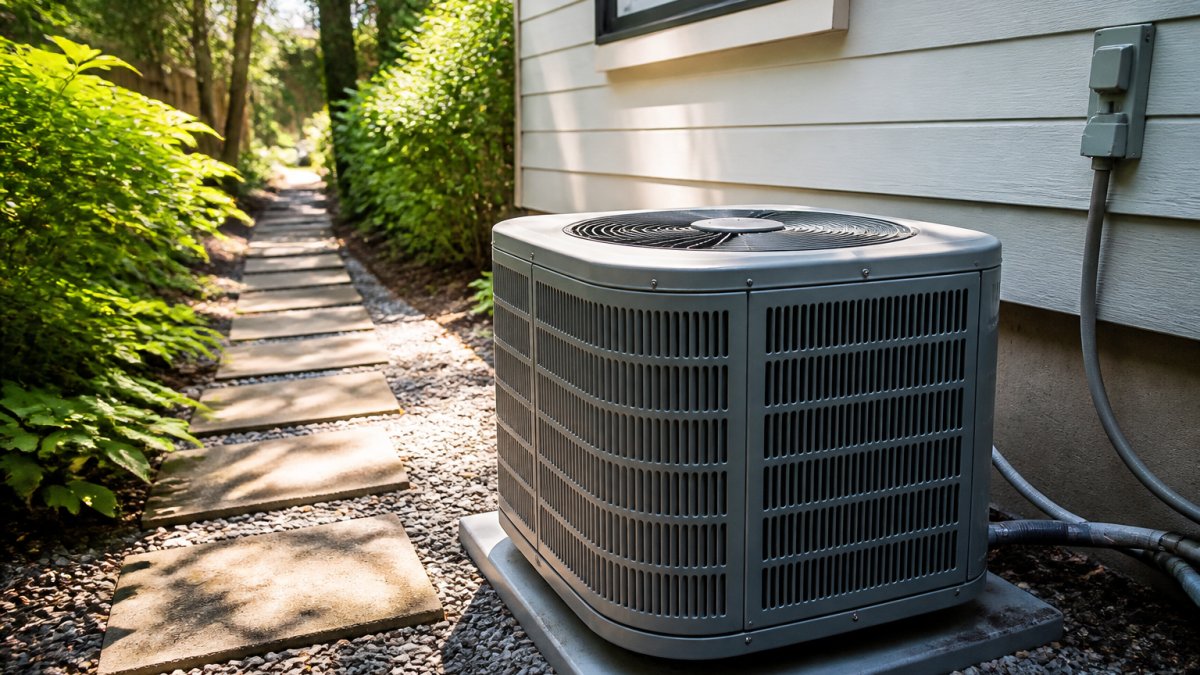
Clean the outdoor condenser coil. Leaves, grass clippings, and cottonwood fluff block airflow across the coil, which raises head pressure and cuts efficiency. Rinse gently with a garden hose after shutting the unit off at the disconnect.
Schedule a tune-up before each season. A technician can check refrigerant charge, capacitor condition, and condensate drainage, small problems that become breakdowns or efficiency losses if ignored.
What a Tune-Up Actually Checks
A useful tune-up is not just a filter swap. It typically includes:
Measuring refrigerant charge and checking for leaks (an undercharged system runs longer and cools less).
Testing capacitors and contactors, which fail with age and cause hard starts.
Cleaning the condensate drain and checking the float switch.
Ask for the readings, not just a checklist. A technician who shows you the before-and-after numbers is giving you something you can compare year over year.
Ducts and Insulation Around the Equipment
Leaky ducts in attics, crawlspaces, and garages dump conditioned air where it does no good. Sealing accessible duct joints with mastic or foil tape is inexpensive and often one of the highest-return maintenance tasks in a home. Insulating ducts in unconditioned spaces matters too, an uninsulated duct run through a 130°F attic loses much of its cooling before it reaches the room.
When Maintenance Is Not Enough
Maintenance protects efficiency, but it cannot fix an undersized system, a failing compressor, or a refrigerant leak that keeps recurring. If your system is more than 12-15 years old, uses R-22 refrigerant, or needs frequent repairs, compare the cost of another repair against replacement.
This is where a maintenance plan earns its keep. Our no-obligation maintenance plan includes a 10-year parts warranty on cooling maintenance, so seasonal tune-ups protect both efficiency and your wallet.
Home Energy Efficiency Improvements: Sealing, Insulation, and Windows
Home energy efficiency improvements fall into two buckets: stopping air leaks and slowing heat transfer. Sealing gaps is cheap and fast.
Great Day Improvements
The DOE's air sealing guide notes that sealing leaks around windows, doors, and utility penetrations is one of the highest-value upgrades a homeowner can make.
Work in this order:
Weatherstripping and caulk. Seal gaps around doors, windows, and pipes.
Attic insulation. Heat rises. A thin attic floor is a common culprit.
Duct sealing. Leaky ducts dump conditioned air into crawlspaces.
Windows and curtains. Close blinds on sunny summer days and open them in winter.
Ventilation matters too. A tight house needs fresh air. Don't seal so aggressively that you trap moisture and stale air.
Does Unplugging Appliances Save Electricity? Standby Power Explained
Does unplugging appliances save electricity? Yes, but modestly. Standby power, often called phantom load, is the electricity devices draw when switched off but still plugged in.
Think about it this way: a single device draws a trickle. The ENERGY STAR overview of standby power explains how these small loads accumulate across a home.
The practical fix is a power strip. Group devices and switch the strip off at night. Focus on:
Game consoles and streaming boxes
Desktop computers and monitors
Chargers and small kitchen appliances
Don't bother unplugging the refrigerator. That's the one appliance where standby logic doesn't apply.
Lighting, Water Heating, and Appliance Upgrades That Pay Back
LED light bulbs use roughly 75% less energy than incandescent bulbs and last many times longer, which makes them the easiest swap on this list. But the payback math matters more than the swap itself.
Use natural lighting where you can, and put lamps on timers or smart plugs so they run only when needed. A smart plug on a lamp costs a few dollars and removes the human error of leaving lights on.
Water Heating: The Quiet Budget Killer
Water heating is often the second-largest energy expense in a home after space heating and cooling, and it is frequently overlooked because it runs silently in the background. The fixes are cheap and cumulative:
Lower the tank temperature to 120°F. Many tanks ship set to 140°F. Dropping to 120°F reduces standby losses and scald risk, and most households never notice the difference.
Insulate the tank and the first few feet of hot and cold pipes. An insulating blanket on an older tank is inexpensive and pays back quickly, especially in unconditioned spaces like garages.
Install a low-flow showerhead. A standard showerhead can flow 2.5 gallons per minute; a low-flow model at 1.5-2.0 gpm cuts hot water use directly without a noticeable drop in pressure for most users.
If your water heater is more than 10-12 years old, start planning for replacement rather than repair. A heat pump water heater can cut water-heating energy use substantially compared with a standard electric resistance tank, though it needs space, a condensate drain, and a cooler location to work well. Check whether your utility offers a rebate before you buy, many do for heat pump water heaters specifically.
Appliances: Match the Label to Your Household
For efficient appliances, the yellow EnergyGuide label is the starting point, not the finish line. It shows estimated annual energy use and cost for that model, which lets you compare two refrigerators or two dryers on operating cost rather than sticker price alone.
Match appliance sizing to your household. An oversized refrigerator or a dryer run for small loads wastes power. A few concrete habits matter as much as the appliance itself:
Run the dishwasher only when full, and use the air-dry setting instead of heated drying.
Wash laundry in cold water when possible; most of a washer's energy goes to heating water, not running the motor.
Clean the dryer lint trap every load and the dryer vent periodically, a clogged vent lengthens dry time and is a fire risk.
Rebates and Incentives: Check Before You Buy
Rebates can meaningfully offset the cost of appliances, water heaters, and lighting upgrades. The DOE's Energy Saver rebate resources explains how federal, state, and utility incentives work, but eligibility and amounts change, so verify current programs with your utility and state energy office before purchase. Keep receipts, model numbers, and installation documentation, most rebate programs require them, and some require installation by a qualified contractor.
Key Takeaway Prioritize by payback, not by excitement. LED swaps in high-use fixtures and a 120°F water-heater setting pay back in weeks to months. A new appliance may take years. Do the cheap, high-use wins first, then let rebates and age guide the bigger purchases.
Renters and Tight Budgets: What You Can Still Do
Renters face a real limit: you can't replace the HVAC system or re-insulate the attic. But plenty of high-value moves don't require a landlord's permission.
Use curtains and blinds to block summer sun and hold winter heat.
Install weatherstripping on doors, which is removable and cheap.
Swap in LED bulbs and take them with you when you move.
If you're in a coastal Delaware rental with an aging system, a professional inspection can tell you whether the unit is struggling.
Lowering your home energy bills starts with diagnosis, not shopping.
When your HVAC system is the bottleneck, Shoretech Services can help.
Frequently Asked Questions
What temperature should I set my thermostat to save energy?
The U.S. Department of Energy recommends setting your thermostat to 68°F when you're home and awake in winter, and lowering it 7-10°F for eight hours while you sleep or are away. In summer, set it to 78°F when home and raise it 7-10°F when out. Each 10°F reduction for eight hours can trim heating costs by roughly 10% annually. A programmable thermostat automates these setbacks so you don't have to remember them.
Does unplugging appliances actually save money?
Yes, but the amount is modest. Devices with clocks, displays, or remote controls draw standby power continuously, and this phantom load can account for 5-10% of residential electricity use. Unplugging chargers, game consoles, and set-top boxes when not in use helps, but a smart power strip that cuts power to a group of devices at once is more practical. Focus first on heating, cooling, and water heating, which dominate most home energy bills.
How can HVAC maintenance help lower energy bills?
A dirty filter, clogged coils, or refrigerant charge that's off forces your system to run longer for the same comfort. Replacing filters every 1-3 months and scheduling an annual tune-up keeps airflow and efficiency where they should be. Sealing duct leaks in unconditioned spaces also matters, since leaking ducts can waste a meaningful share of the air you paid to cool or heat. Regular maintenance is usually the cheapest efficiency measure available.
What home improvements reduce heating and cooling costs the most?
Air sealing and insulation typically deliver the best return. Weatherstripping doors, caulking gaps around windows and pipes, and adding insulation in the attic address the biggest source of waste: conditioned air escaping. After that, upgrading to a high-efficiency heat pump or furnace, switching to LED bulbs, and lowering your water heater to 120°F all contribute. Prioritize the envelope first, then equipment, so a new system isn't sized to compensate for leaks.
Click Here to Schedule Now


Comments