


7 Furnace Carbon Monoxide Warning Signs Every Home Needs
Last Updated: November 5, 2026
Quick Summary
Furnace carbon monoxide signs include yellow, orange, or flickering burner flames, soot or scorch marks near the flue, rust on vents, and flu-like symptoms that improve outdoors. Since carbon monoxide has no color, taste, or smell, these clues and a working alarm are essential for early detection.
Look for steady blue burner flames; yellow, orange, or flickering flames signal incomplete burning.
Soot, scorch marks, rust, or condensation on venting can indicate exhaust is not leaving the home properly.
Headache, dizziness, and nausea without fever, especially in several people or pets, can signal exposure.
Test carbon monoxide alarms monthly and replace them at their end-of-life date.
If an alarm sounds, get everyone outside, call 911 from outside, and do not reenter until cleared.
Table of Contents
Why Furnace Carbon Monoxide Is Hard to Spot
Furnace carbon monoxide is one of the most dangerous hazards in a home, and it is also one of the hardest to detect. It has no color, no taste, and no smell.
Carbon monoxide is a gas produced when fuel burns incompletely (the CDC). A furnace that is working properly burns fuel cleanly and vents exhaust outside. When the burner, heat exchanger, or venting system fails, the gas can leak into living spaces.
Because you cannot see or smell it, you rely on indirect clues and on a working detector. That is why the warning signs below matter so much.
Visible Clues That Point to a Furnace or Venting Problem
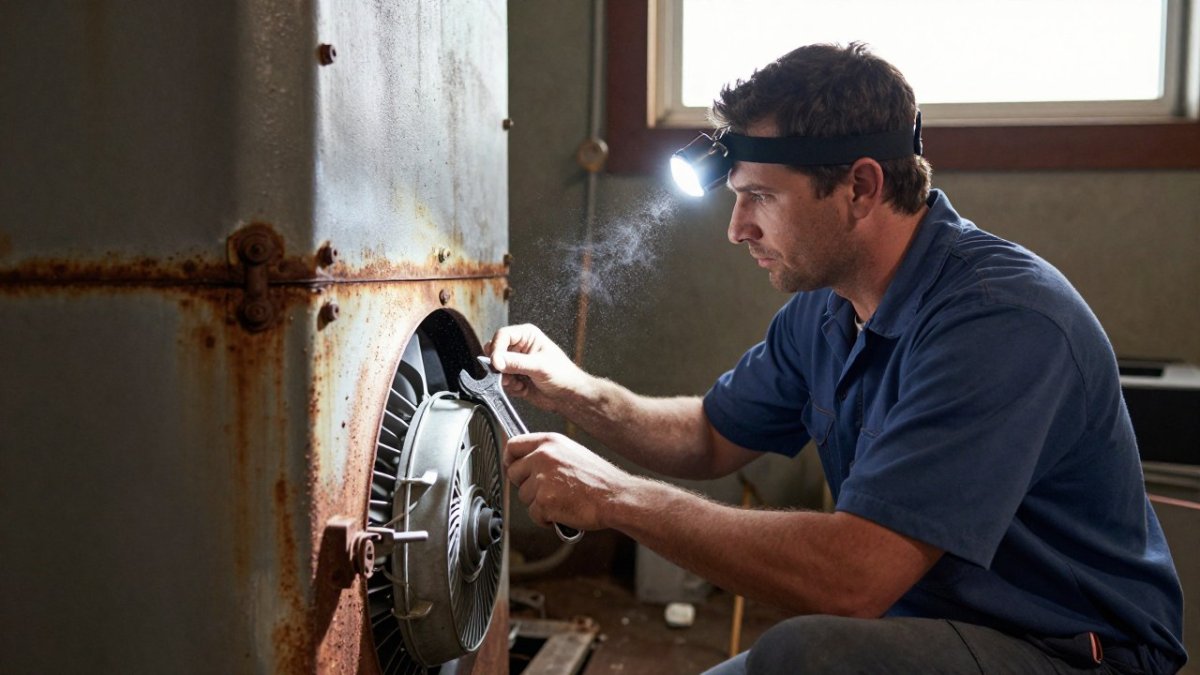
Some warning signs you can see with your own eyes. They do not prove carbon monoxide is present, but they suggest the furnace or its venting may not be working correctly. A homeowner can check the area safely with a flashlight, but should never take apart the unit, open the heat exchanger compartment, or disconnect venting.

The most important limitation to understand: flame color, soot, rust, and condensation are clues about combustion and venting, not carbon monoxide measurements. Carbon monoxide has no color, taste, or smell, so no visual sign can confirm or rule out its presence (the EPA).
Yellow, Orange, or Flickering Burner Flames
A healthy gas burner shows a steady blue flame with a crisp inner cone. When the flame turns yellow, orange, or flickers, the fuel may not be burning completely. That incomplete burning is what produces carbon monoxide.
Look for a steady blue flame at the burner
Note any yellow or orange tips, or a flame that floats or lifts off the burner
Watch for flames that dance, pulse, or burn with a noisy, roaring sound
Check whether the flame changes when the furnace starts or the blower turns on
If you see these signs, turn the furnace off at the thermostat if it is safe to do so and call a professional. Do not repeatedly relight the pilot or reset the furnace to see if the flame corrects itself.
Watch out: a brief orange tint when the burner first lights can be normal as dust burns off, but a sustained yellow or orange flame is not something to dismiss.
Soot, Scorch Marks, Rust, and Condensation on Vents
Soot is a black or gray residue. It often shows up around the furnace, on the vent pipe, or on nearby walls and ceilings.
Rust or corrosion on the flue, chimney, or vent pipe can also be a sign of trouble. So can unusual condensation or moisture on venting components, which may point to a venting or draft problem rather than normal operation. Any of these means the venting system needs an inspection by a qualified technician.
What to Check Safely and What to Leave Alone
With a flashlight and without touching the equipment, you can look for discoloration on the furnace cabinet, staining on the vent connector, rust flakes near the flue, and moisture on the vent pipe.
Do not open panels, remove screws, disconnect the vent pipe, or probe the heat exchanger. Those steps require training and tools, and disturbing venting can make a draft problem worse. If you see any of the clues above, stop using the furnace and arrange an inspection.
The visible clues below can signal a combustion or venting problem, though none of them measures carbon monoxide directly.
Clue | What it may indicate | What to do |
Yellow, orange, or flickering flame | Incomplete burning | Turn off if safe and call a professional |
Sustained yellow or orange flame | Not normal burner operation | Do not dismiss; schedule inspection |
Soot or scorch marks near flue | Exhaust not leaving home properly | Stop use and arrange inspection |
Rust or corrosion on flue or vent | Venting system problem | Have technician inspect venting |
Condensation on vent pipe | Possible venting or draft problem | Have technician inspect venting |
Brief orange tint at first light | Can be normal as dust burns off | Watch whether it persists |
Symptoms of Carbon Monoxide From Furnace Exposure
Symptoms are often the first clue people notice. They can be easy to mistake for something else, especially in winter when colds and the flu are common. The key pattern is that several people, or pets, feel unwell at the same time, and they feel better once they leave the house.
Headache and dizziness
Nausea or vomiting
Fatigue or unusual sleepiness
Confusion
Shortness of breath
If symptoms appear and improve when you go outside, take that pattern seriously.
Flu-Like Symptoms Without a Fever
A common warning sign is feeling sick without a fever. Carbon monoxide can cause headache, tiredness, and nausea that feel like the flu, but it does not cause the fever that usually comes with a virus. Watch for this pattern, especially when more than one person in the home is affected.
Symptoms in Children, Older Adults, and Pets
Children, older adults, and pets are often affected first and most severely. A child may become unusually cranky or drowsy. An older adult may have worsening confusion or shortness of breath. Pets may act lethargic, weak, or restless.
Do not wait for a pet or family member to feel very ill. If anyone in the home has unexplained symptoms, act quickly.
Can a Furnace Leak Carbon Monoxide When Turned Off?
A furnace that is switched off generally does not produce new carbon monoxide. However, a problem in the venting system, a cracked heat exchanger, or a backdraft from another appliance can still allow gas into the home even when the furnace is off. Exhaust from a nearby fireplace, water heater, or vehicle in an attached garage can also be a source.
Turning the furnace off does not make the home safe on its own. If you suspect a leak, leave the home and call for help.
How to Tell If a Carbon Monoxide Detector Is Working
A carbon monoxide alarm is your best early warning, but only if it is placed, tested, and replaced correctly. Placement, testing, and replacement all matter, and the details are where most households fall short.
Where to Install Carbon Monoxide Alarms
Follow the manufacturer's instructions for your specific model, since placement rules vary by alarm type. As a general pattern, install alarms on every level of the home and near sleeping areas so the alarm can wake occupants. Keep alarms out of dead air spaces and away from the immediate vicinity of fuel-burning appliances, and follow the manual for spacing from bathrooms, kitchens, and supply registers. If you have a combination smoke and carbon monoxide alarm, follow the placement guidance for that unit rather than treating it like a standalone smoke alarm.
How to Test and Maintain Alarms
Test each alarm monthly using the test button, following the manual's procedure (CO Alarms)
Replace batteries as the manufacturer recommends, or sooner if the alarm chirps
Vacuum the alarm's vents periodically to remove dust that can interfere with the sensor
Replace the entire unit when it reaches its end-of-life date, even if it still responds to the test button
Record the installation date on the back of each alarm or in a household log so you know when replacement is due. A test button confirms the alarm's circuitry and sounder, not that the sensor is still accurate, which is why end-of-life replacement matters.
Chirp Versus Alarm: Know the Difference Without Dismissing a Warning
A chirping alarm can mean a low battery or an end-of-life signal. It is not always a sign of gas. Learn the difference by checking the alarm's manual, which lists the specific sound and light patterns for low battery, end-of-life, malfunction, and alarm conditions.
Never assume a sound is "just the chirp" without confirming it against the manual. If the alarm sounds a continuous alarm pattern rather than an intermittent chirp, treat it as a real emergency and follow the emergency steps below. If you cannot tell which pattern you are hearing, leave the home and call for help rather than waiting to sort it out.
When an Alarm Sounds
If the alarm sounds an alarm pattern, get everyone outside, call 911 from outside the home, and do not reenter until emergency responders say it is safe. Do not silence the alarm and stay inside to investigate. After the home is cleared, have a licensed HVAC professional inspect the furnace and venting before the system is used again.
Emergency Steps If You Suspect a Furnace Leak
If your carbon monoxide alarm sounds, or you notice several symptoms at once, act immediately:
Get everyone out of the home right away, including pets.
Move to fresh air outside or in a clearly ventilated area.
Call 911 or your local emergency number from outside the home.
Do not reenter until emergency responders say it is safe.
Once the home is cleared, call a licensed HVAC professional to inspect the furnace and venting.
Do not try to find the source yourself, and do not run the furnace again until a professional has checked it.
Booking a Professional Furnace Inspection With Shoretech Services
Visual checks and an alarm are helpful, but they cannot confirm that a furnace is burning safely. Shoretech Services offers our HVAC services, including furnace repairs, and provides heating system replacement. Regular maintenance that includes safety checks is one of the best ways to prevent problems before they start.
If you suspect a leak or notice any of the warning signs above, do not wait. Contact our heating repair service for prompt help. Shoretech Services is available 24/7 to respond to urgent heating problems. You can also read more about what a dusty smell at startup can mean if you notice odd odors when the furnace first turns on.
Click Here to Schedule Now.
Frequently Asked Questions
How can I tell if my furnace is leaking carbon monoxide?
Carbon monoxide is odorless and colorless, so you usually cannot smell or see it. Look for clues instead: yellow or flickering burner flames, soot or scorch marks around the furnace or vent, rust on the flue, and condensation on vent pipes. Symptoms such as headache, dizziness, or nausea that improve when you leave the house are also a warning sign. Visual clues alone are not proof of safety, so a working CO alarm and a professional inspection are the reliable checks.
Can a furnace leak carbon monoxide when it is turned off?
Yes. A furnace that is off can still affect indoor air if a venting problem exists, such as a blocked flue, a cracked heat exchanger, or a draft pulling exhaust back into the home. Other fuel-burning appliances, like a water heater or fireplace, can also release carbon monoxide while the furnace is idle. If your CO alarm sounds with the furnace off, leave the home and call 911 or your fire department from outside.
How can I tell if my carbon monoxide detector is working?
Press the test button on the alarm. A working unit produces a loud alarm sound. Check the manufacturer date printed on the back and follow the manufacturer's replacement guidance. A steady chirp usually means a low battery or end-of-life signal, while a repeating alarm pattern means carbon monoxide may be present. Test alarms monthly and install them near sleeping areas and on every level of the home.
What are the symptoms of carbon monoxide exposure from a furnace?
Early symptoms often include headache, dizziness, nausea, fatigue, and confusion. Many people describe flu-like symptoms without a fever. A key pattern is that several people or pets in the same home feel unwell at the same time, and symptoms ease after time outdoors. Children, older adults, and pets can show symptoms sooner. If anyone has severe symptoms, shortness of breath, or confusion, get outside and call 911 immediately.
Comments